Buying From Abroad Without Being in the Room

Ian Shaw·September 8, 2026·4 min read
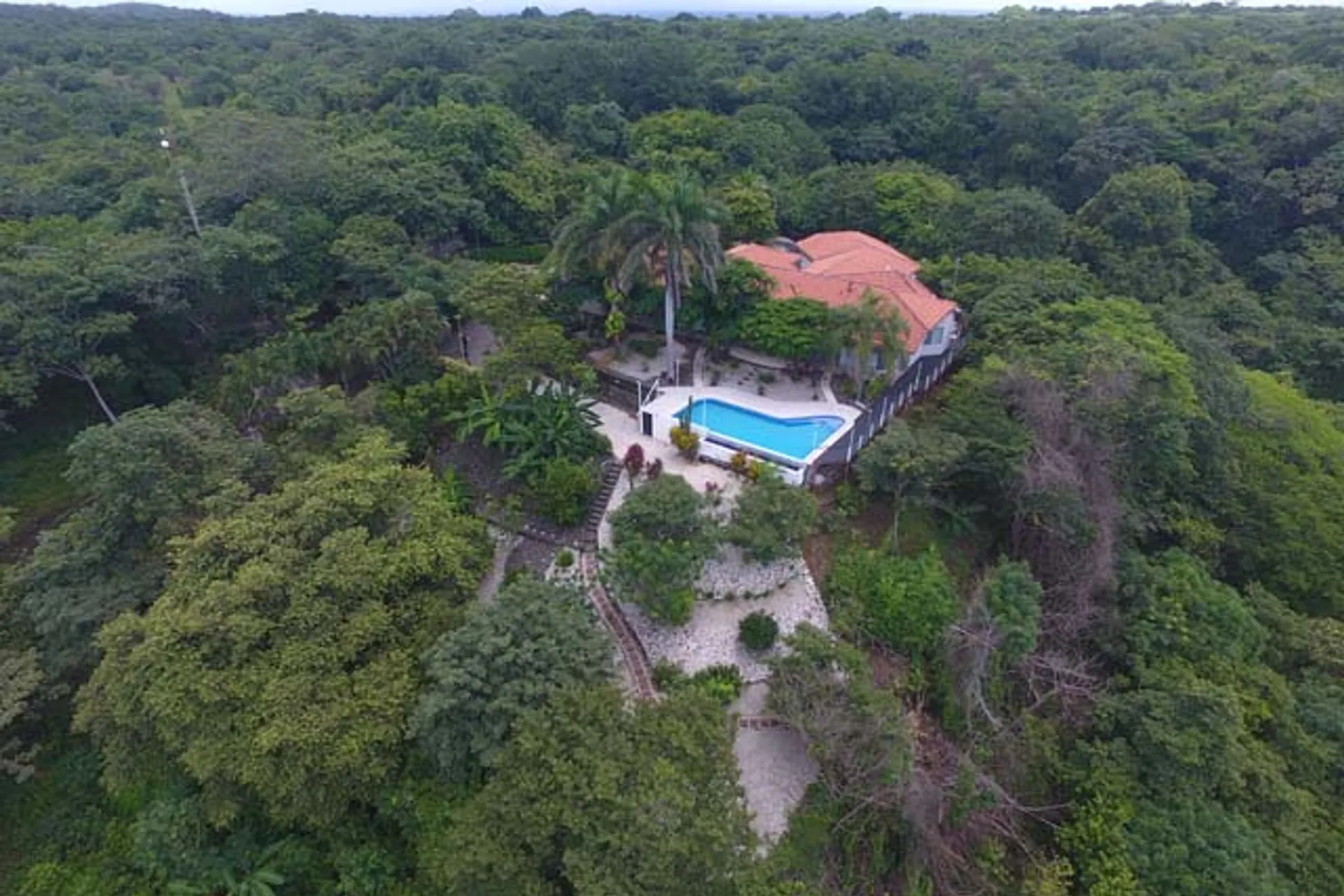
Aerial view of a house and pool set in dry forest, its access track visible from above

You can close on a Costa Rican property without setting foot in the country. Here is what has to be true for that to be safe — the power of attorney, the escrow, and the six documents that decide whether the property is what the listing says.

Continue reading

Costa Rica Livin’Pacific Coast to the Volcanoes
Co-sharingRental ManagementPre-ConstructionAboutArticlesFAQContact
← Articles

Does Buying Property Get You Residency in Costa Rica?

Not by itself, no. Ownership and immigration status are separate questions here, and the investment route that does connect them is in flux as of September 2026.

How Property Is Owned in Costa Rica

Titled land, concession land, and the derecho — the undivided share that has no equivalent in North America and catches more foreign buyers than anything else in the registry.

What It Costs to Buy and Own Property in Costa Rica

Closing costs run about 3% to 4% and most of that is fixed by law. The costs that surprise people are the annual ones nobody mentions at closing, and the withholding on the way out.

Yes, you can buy a property here without being present. It happens regularly and it works. We would still rather you came and stood on the land first — not out of formality, but because photographs do not convey a road in October, or what is audible at seven in the morning, or how far the nearest clinic actually is.

But when travel is not practical, a remote closing is a well-worn path. Here is what it requires.

The power of attorney

You appoint a Costa Rican attorney to sign on your behalf using a special power of attorney — a poder especial, scoped to this one transaction rather than a general grant over your affairs. Insist on that scoping.

Two mechanical points matter, and getting either wrong will stall a closing by weeks. Because a property transfer has registry effects, the power must be executed by public deed rather than a private letter. And if you sign it outside Costa Rica, it needs an apostille before it can be used here — the certification under the Hague Convention that makes a foreign-notarised document acceptable to Costa Rican authorities. If your country is not a Hague signatory, the equivalent consular legalisation applies. Apostilles are obtained from a designated authority in your own country, they take time, and they are the single most common cause of a remote purchase missing its closing date.

A related change worth knowing: a 2026 reform tightened how corporate representation works, moving Costa Rican practice away from the informal carta poder authorisation letter that used to circulate. If a company is on either side of your transaction, the representation needs to be properly constituted. Your attorney will know; a seller insisting a signed letter is sufficient may not.

The escrow

Your money should move into a SUGEF-registered escrow, not to the seller directly and not to an attorney's personal or operating account.

Understand precisely what that registration means, though, because it is routinely oversold. Registration with SUGEF, the financial regulator, is a compliance registration. It is not a licence, not an endorsement, and not a guarantee of the escrow provider's solvency. It means the provider has registered and is subject to anti-money-laundering obligations. Check the provider itself — how long it has operated, who runs it, who else has used it — rather than treating the registration as the answer.

Plan the money early. Costa Rican banks and escrow providers must document the source of funds on significant inbound transfers, and this is where remote purchases most often stall: a wire arrives, compliance asks where it came from, and the buyer is on holiday without access to two-year-old statements. Assemble that paperwork before you need it. Build in more time than the wire itself should take.

Costa Rica Livin’Realty SA

Expat-led real estate across Costa Rica. Honest guidance for foreign buyers and sellers, backed by a network of lawyers, builders, surveyors and inspectors we have tested on our own deals.

info@crlivin.com
WhatsApp +1 (416) 558-7413
CR WhatsApp +506 8655-2677
CR Telephone +506 8655-2677

Pueblito Norte, Calle La Chorrera, Playas del Coco
Guanacaste, Costa Rica

Follow us

Areas

Services

More

Share a listing. Keep your commission.

© 2026 Costa Rica Livin’ Realty SA. All rights reserved.··Developed by Koltnex

Expats Helping Expats Buy and Sell Your Dream Homes

Coco, Ocotal, Hermosa, Panamá & the Papagayo Peninsula
Arenal Volcano, the Lakes, La Fortuna, Tilarán, Cañas, Upala & San Carlos
Tamarindo, Flamingo, Marbella & the Surf Beaches
Jacó, Herradura, Esterillos, Punta Leona & the South Pacific
Consulting
Rental Management
Trusted Services we use
Relocation Services
Pet Relocation
Professional Photography
Financing
Legal Services
Mechanic Services
Home Inspections
Medical & Emergency
Dental Services
Our Pura Vida Approach
Listings
Co-sharing
Hand-picked
Pre-Construction
About
Articles
FAQ
Contact
Talk with Ian
Privacy Policy

The six documents that decide everything

Whether you are in the room or six thousand kilometres away, the purchase is only as good as the due diligence. Ask for these by name:

  1. The folio real. The registry record: who owns it, the registered area, the fiscal value, and every mortgage, lien, easement and annotation. Everything starts here.
  2. The plano catastrado. The registered survey. It must match the folio real and it must match what you were shown. Discrepancies between a plano and reality are common and are not always cheap to resolve.
  3. The water letter. The carta de disponibilidad de agua from the provider — AyA, or the local community-run ASADA in most rural and coastal areas. Without it you generally cannot obtain a construction permit, so on a building lot this is not paperwork, it is whether the lot is usable. In Guanacaste this is the single hardest document to get and the most common cause of permit delay; water here is genuinely constrained, alternative supplies are usually refused, and a letter has a limited validity period, so a copy from two years ago proves very little. If the seller cannot produce a current one, ask directly why.
  4. Municipal standing. Property tax paid up, land-use certificate (uso de suelo), permits in order and no open violations.
  5. Corporate documents, if a company holds the property — including whether its beneficial-owner filing is current, because a company behind on that filing cannot obtain the certificates it needs to complete a sale.
  6. Condominium documents, where applicable: the bylaws, the fee history, the reserve position, and the rental rules. Read the rental rules before you buy anything you intend to rent out.

What we do on this side

Someone has to physically go and look. We walk the property, photograph what the listing photographs avoided, check the access road, talk to neighbours where that is useful, and tell you what we would want to know if it were our money. We are not the ones who certify title — that is your attorney's job, and you should have your own attorney rather than the seller's.
We are expats who bought here ourselves. Every awkward question we ask on your behalf is one somebody once had to ask for us.


Written September 2026. Procedures and requirements change; this describes the shape of a transaction, not legal advice, and your attorney confirms the specifics.

and we will go and look at it.

Tell us what you are considering